Introduction
In today’s beauty-conscious world, hair extensions have gained immense popularity as a transformative tool for achieving longer and fuller hair. Some methods pose significant risks to the health of your natural hair and scalp, leading to growing concerns about the potential damage associated with hair extensions.
The High-Risk Culprits
Glue-In Extensions involve attaching hair strands to the natural hair using adhesive glue. While this method may provide instant length and volume, it can cause significant damage. The glue can be harsh on the scalp, leading to irritation, hair breakage, and even hair loss. Additionally, removing the extensions often requires the use of solvents, further compromising the health of the hair.
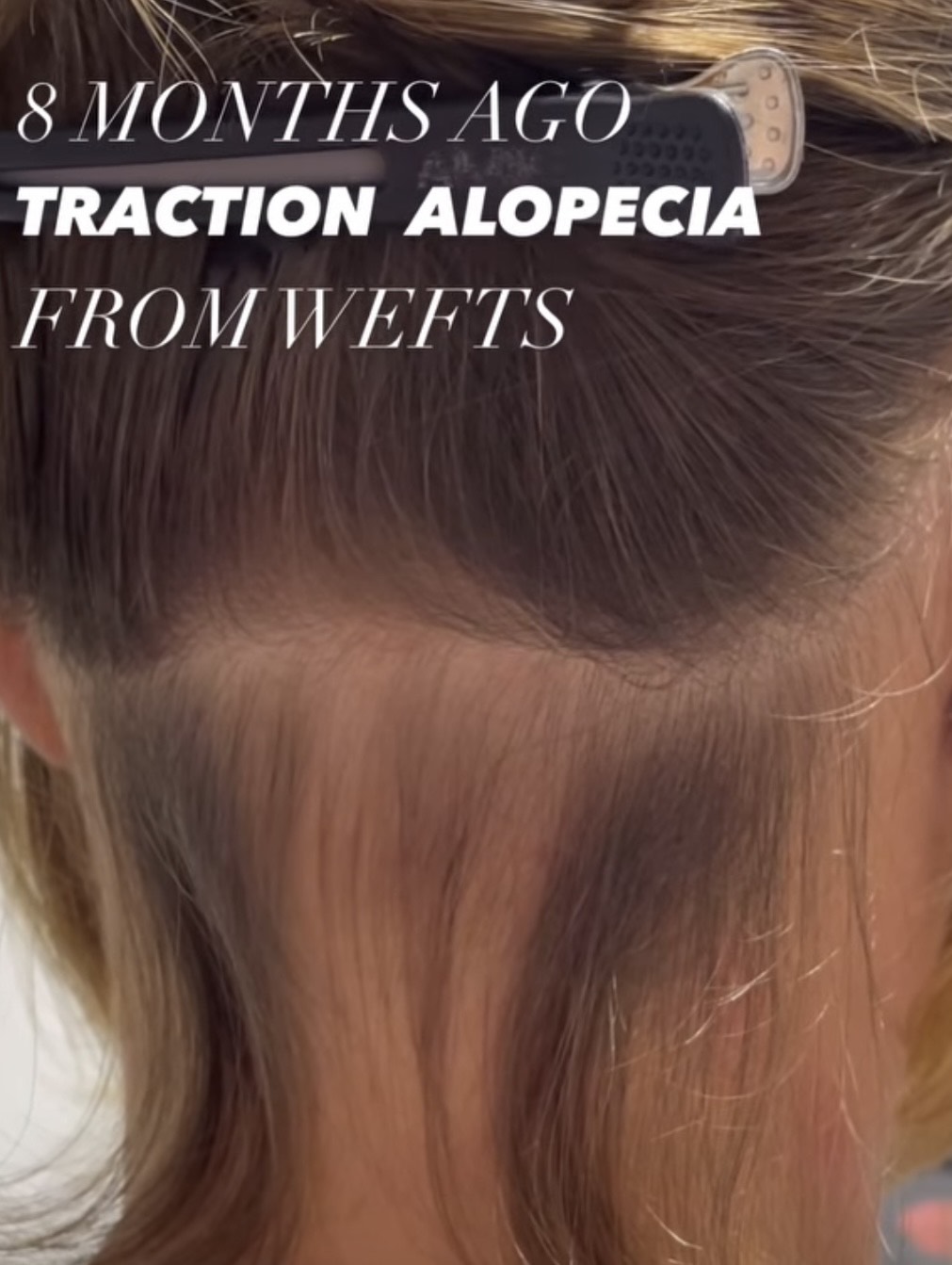
Weave or Sew-in Extensions involve braiding the natural hair tightly and sewing wefts of hair onto the braids. This method can put excessive tension on the scalp, leading to traction alopecia, a condition characterized by hair loss due to constant pulling. Improper installation or maintenance can also result in matting, tangling, and damage to the natural hair. Weft and weave hair extension methods involve tightly weaving or sewing hair extensions into braided sections of your natural hair. Despite being long-standing techniques in the industry, they carry significant risks. The added weight and pressure on the scalp can cause tension and stress, potentially leading to hair breakage, traction alopecia, and irreversible damage to the hair follicles.
Tape-in Extensions involve attaching wefts of hair to the natural hair using adhesive. The tape can become visible or slip out if not properly maintained, compromising the desired aesthetic. Tape-in extensions gained popularity for their quick and easy application process. However, this convenience comes at a cost. The adhesive nature of these extensions can add considerable weight and strain to the hair shaft and scalp. Over time, this can result in thinning hair, hair loss, and a compromised scalp condition.
The Safer Alternative
1. Gentle Attachment: Nanobead extensions offer a safer alternative with their individual bead attachment technique. By using tiny beads, the weight is distributed evenly, reducing tension on the scalp. This gentle attachment method provides a safeguard against extensive damage to your natural hair by remaining under the weight threshold per attachment.
2. Long and Healthy Hair Growth: The absence of excessive tension on the scalp and natural hair allows for unhindered hair growth. Nanobead extensions maintain the integrity of your natural hair, enabling it to grow long and healthy without the risk of breakage or long-term damage.
3. Weight Threshold Compliance: Nanobead extensions are designed to stay below the weight threshold for hair attachment on the scalp. By staying within this limit, the extensions alleviate any strain on the hair roots and follicles, ensuring a comfortable and safe experience.
Embracing Conscious Hair Extension Choices
With a rising emphasis on maintaining beautiful, healthy hair, the anxiety surrounding potential damage caused by hair extensions is a valid concern. It is essential to be aware of the risks associated with certain extension methods and opt for safer alternatives that prioritize the long-term well-being of your natural hair.
While wefts, weaves, and tapes-in extensions have dominated the market for many years, the introduction of nanobead extensions provides a more reliable, gentler approach. These lightweight extensions help you achieve the desired length and volume without compromising your hair’s health.
Conclusion
When it comes to hair extensions, being well-informed is key. Understanding the risks posed by various attachment methods empowers you to make wise choices that protect your natural hair and scalp. By prioritizing the health of your hair, you can still enjoy hair extensions without compromising your hair’s long-term integrity. While hair extensions can be a fantastic way to experiment with different hairstyles, it is crucial to be aware of the potential risks associated with certain methods. The anxiety surrounding hair extension damage is a result of the prevalence of these dangerous techniques. Prioritizing proper application and maintenance from extensions can help mitigate the risks and ensure the longevity of your hair’s health.
 THIS IS HAIR BY RI
Leave a comment